
UL 325 Safety: What Every Homeowner Should Know Before Building an Automatic Gate
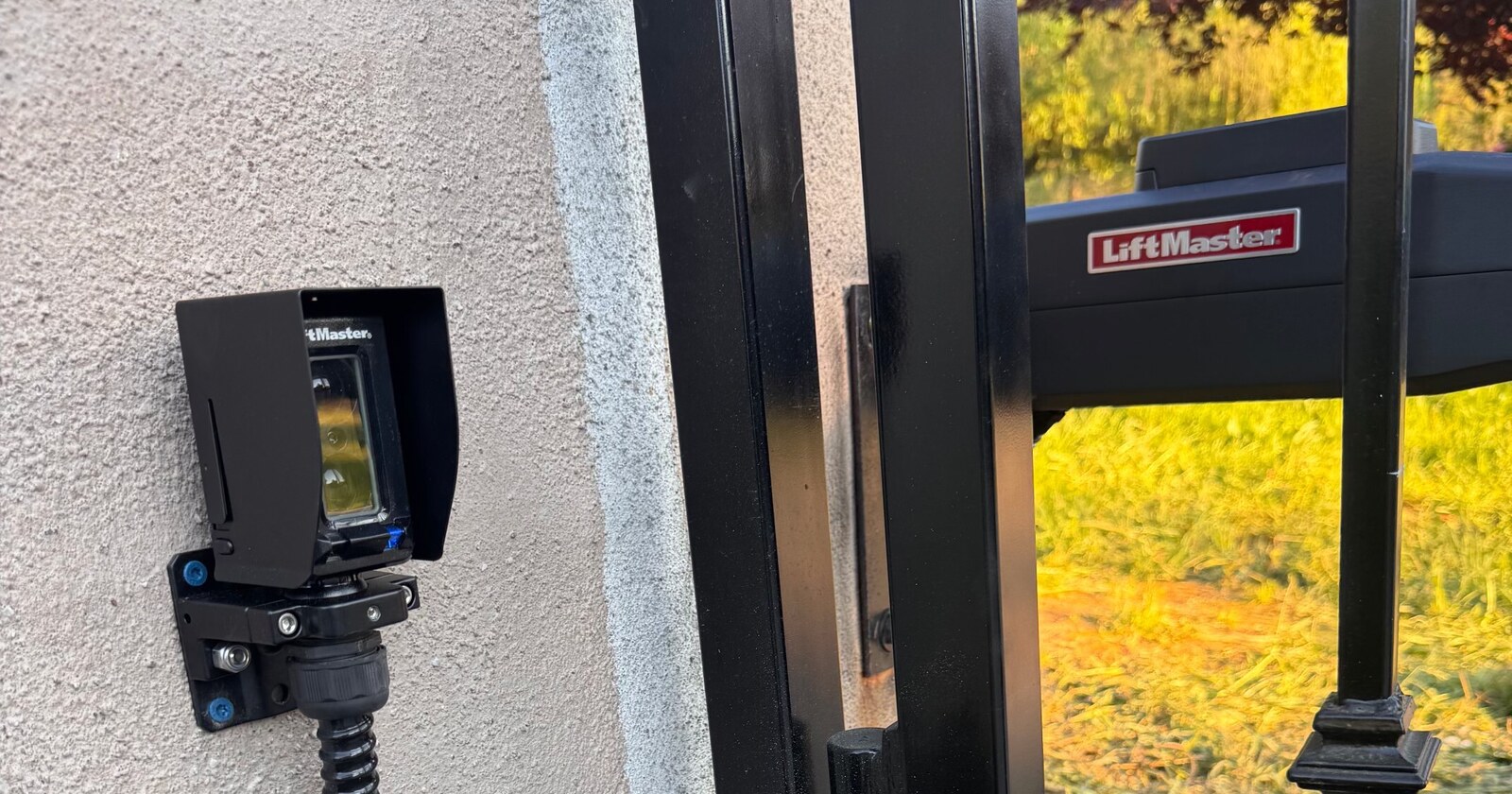
What UL 325 requires for automatic gates, residential garage door openers and commercial roll-up doors — entrapment protection, photo eyes, gate classes and warning signs — explained for Sacramento-area owners.
Quick answer: what is UL 325?
UL 325 is the main safety standard from Underwriters Laboratories for automatic opening equipment — vehicular gate operators, garage door openers, commercial door operators, louvers and windows. It sets the rules for how these machines must detect people and objects and stop or reverse before anyone gets hurt.
This guide covers only the parts that apply to what A&M Garage Door & Gate Service installs and repairs: automatic driveway gates, residential garage door openers and commercial roll-up doors.
Why UL 325 matters before you build an automatic gate
A gate is heavy, it moves on its own and it often closes when nobody is watching. Most gate injuries happen to children and pedestrians caught between a moving gate and a post, wall or the ground. UL 325 exists to prevent that.
Planning for it from day one costs far less than retrofitting later. The gate layout, posts, wiring paths and sensor locations all depend on it.
Gate usage classes: which one is your property?
UL 325 sorts gate operators into four classes based on where they're used:
- Class I — residential: a single home or a small group of up to four homes.
- Class II — commercial or general access: apartments, HOAs, hotels, retail and public parking.
- Class III — industrial or limited access: factories, loading areas and other sites not open to the public.
- Class IV — restricted access: secured sites with supervision, such as prisons or airport security areas.
Entrapment protection: the heart of UL 325
An entrapment zone is any spot where a person could be pinned by the moving gate. Since the 2016 edition, gate operators must have two independent means of entrapment protection for each direction of travel where a hazard exists. At least one is usually an external device the operator monitors — if a sensor is missing, unplugged or failing, the gate won't run normally.
- Built-in (inherent) sensing — the operator detects an obstruction and reverses.
- Photo eyes (non-contact sensors) — an invisible beam across the gate path.
- Safety edges (contact sensors) — pressure-sensitive strips on the gate or posts.
- Constant-pressure control — the gate moves only while someone holds the button in sight of the gate.
Gate construction rules (ASTM F2200)
UL 325 points to ASTM F2200 for how the gate itself must be built. Key points homeowners should know:
- Openings in the gate within reach of the ground must be small enough that a child can't put an arm or head through near the moving parts.
- Slide gates need guarded rollers and covered gaps so fingers and feet can't be pulled in.
- Slide gates must not use overhead or exposed rollers that create pinch points, and should have positive stops at both ends.
- Swing gates must not open out into a public sidewalk or street.
Pedestrians need their own gate
A vehicle gate is not a walkway. UL 325 calls for a separate pedestrian gate or walk-through path so people never have to walk through the vehicle opening. Place it far enough from the moving gate that no one can reach the gate while walking through.
Controls and warning signs
- Mount the open/close buttons at least 6 feet from the gate, out of reach of children and where the user can see the gate moving.
- Post the required warning signs on both sides of the gate, easy to see.
- Keep remotes away from children and never let kids play near the gate.
- Make sure there's a manual release so the gate can be opened in a power outage.
UL 325 and your residential garage door opener
Garage door openers sold in the U.S. since the early 1990s must reverse when they hit an obstruction and have photo eyes near the floor. California law also requires automatic-reversing openers. Since 2019, new openers sold in California must include a battery backup (SB 969).
Test yours monthly: lay a 2×4 flat under the door — it should reverse on contact — and wave something through the photo-eye beam while the door closes.
UL 325 and commercial roll-up doors
Motorized commercial roll-up and sheet doors must also have monitored entrapment protection — usually photo eyes or a reversing bottom-edge sensor — unless the operator runs only on constant-pressure control. Warehouses, mini storage and shops should check that sensors are installed, aligned and working, especially after a forklift or truck bumps the door.
Does my existing gate need to be upgraded?
UL 325 applies to equipment when it's made and installed, so an older gate isn't automatically illegal. But if you replace the operator, the new one will require compliant sensors to run. Older gates without photo eyes or edges are still a real safety risk, and adding them is usually a small job compared with the gate itself.
UL 325 checklist before you build
- Pick a UL 325 listed operator for your gate's class, weight and length.
- Plan photo eyes and/or safety edges for every entrapment zone.
- Build to ASTM F2200: small openings, guarded rollers, no swing into public walkways.
- Add a separate pedestrian gate.
- Want a checklist for your own project? Use our free safety checklist tool at amgaragedoorgate.com/safety-checklist.
- Place controls 6+ feet away with a view of the gate; install warning signs on both sides.
- Plan power, conduit and a battery backup or manual release.
- Hire a CSLB-licensed C-61/D-28 contractor and keep the owner's manual.
Automatic gate and garage door safety service in Sacramento
A&M Garage Door & Gate Service (CSLB license #1132340) installs and repairs automatic driveway gates, residential garage door openers and commercial roll-up doors in Sacramento, Natomas, Elk Grove, Roseville, Rancho Cordova, Folsom, Citrus Heights, Carmichael, Davis, Lincoln and nearby. We can check your photo eyes, safety edges, reversing and warning signs. Call or text (279) 900-6320.
Frequently asked questions
What is UL 325?
UL 325 is the Underwriters Laboratories safety standard for automatic gate operators, garage door openers, commercial door operators, louvers and windows. It requires them to detect people and objects and stop or reverse.
Is UL 325 required for residential gates?
Yes. Residential gate operators fall under Class I, and listed operators must be installed with the required entrapment protection, such as photo eyes or safety edges.
What are the four UL 325 gate classes?
Class I residential, Class II commercial/general access, Class III industrial/limited access and Class IV restricted, supervised access.
How many safety sensors does an automatic gate need?
Two independent means of entrapment protection for each entrapment zone, with external sensors monitored by the operator. The exact number depends on the gate type and layout.
What happens if a gate sensor fails?
Modern UL 325 operators check their monitored sensors. If one fails or is disconnected, the gate stops running normally until it's fixed.
Do I need a separate pedestrian gate?
Yes. UL 325 says people should not walk through the vehicle gate, so a separate pedestrian gate or path is required.
Does my old gate have to meet the current UL 325?
Not automatically, but a new operator will require compliant sensors, and adding them improves safety on any gate.
Does UL 325 apply to garage door openers?
Yes. Residential openers must reverse on obstruction and use photo eyes. In California, new openers must also have battery backup.
Does UL 325 apply to commercial roll-up doors?
Yes. Motorized commercial doors need monitored entrapment protection such as photo eyes or a reversing edge, unless they run only on constant-pressure control.
How do I test my garage door's auto-reverse?
Once a month, lay a 2×4 flat under the door and close it. It should reverse on contact. Also break the photo-eye beam while it closes; it should reverse.
Who can install an automatic gate in California?
Gate and garage door work falls under the C-61/D-28 classification. Check any license at cslb.ca.gov. A&M Garage Door & Gate Service is CSLB license #1132340.
Can A&M add safety sensors to my existing gate?
Yes. We add and repair photo eyes, safety edges and warning signs on gates and garage doors across the Sacramento area. Call or text (279) 900-6320.
Standards and safety references
- UL Standards & Engagement — UL 325, Door, Drapery, Gate, Louver and Window Operators and Systems
- DASMA — Gate operator safety and UL 325 technical data sheets
- ASTM F2200 — Standard Specification for Automated Vehicular Gate Construction
- U.S. CPSC — Garage door and opener safety
- CSLB — Check a contractor's license
Reviewed November 6, 2026. Always follow the instructions for your specific door, gate and operator.
Talk to a local technician
Free estimates and upfront pricing on garage door and gate repair anywhere in Greater Sacramento — 24 hours a day.
Keep reading
- Garage Door Spring Broke? Don't Pull the Red Emergency Cord First
- Garage Door Track Options: Standard, Low Headroom or High Lift for Your Sacramento Home?
- California's Garage Door Battery Backup Law (SB 969): What Sacramento Homeowners Need to Know
- Automatic Driveway Gate Cost in Sacramento: Swing vs Slide (2026 Guide)
- 5 Garage Door Warning Signs Sacramento Homeowners Should Not Ignore
- 5 Reasons to Upgrade Your Garage Door Weather Seals This Fall
- 7 Signs Your Garage Door Opener Motor Is Failing (And What to Do)
- Is Your Garage Door Weatherproof? Why a New Bottom Seal Matters
- Maximizing Energy Efficiency: The Importance of Garage Door Insulation
- Wayne Dalton TorqMaster Springs: Most-Asked Questions & Facts (2026)
- How Long Do Garage Door Springs Really Last in Sacramento's Climate?
- Is It Cheaper to Repair or Replace My Garage Door Opener?