
5 Reasons to Upgrade Your Garage Door Weather Seals This Fall
Sacramento summer heat can leave garage door seals brittle before winter rain arrives. Learn what to inspect, which seal fits and how long replacement weatherstripping lasts.
Quick answer: why replace garage door seals in fall?
Fall is the best inspection window in Sacramento because months of direct sun and triple-digit heat may have hardened the seal just before cooler Delta breezes and winter rain expose every gap. Replacing damaged weatherstripping now helps control leaves, dust, drafts, runoff and pest entry before wet weather arrives.
Start with a simple daylight test: close the garage door, turn off the interior lights and look along the floor, sides and top. A continuous dark contact line is the goal. Light at the corners or under one section tells you where the seal, retainer, floor or door alignment needs attention.
1. Keep fall leaves, dust and debris outside
Dry Sacramento Valley winds carry leaves, seed pods and fine dust toward the largest opening in the house. A torn or permanently flattened bottom seal leaves a direct path under the door, where debris collects around vehicles, tools and storage boxes.
A correctly sized replacement compresses across the full width of the concrete. It should close the gap without folding over, dragging excessively or forcing the opener to push the door into the floor.
2. Reduce drafts around an attached garage
Weatherstripping does not add insulation to a thin garage door panel, but it does reduce uncontrolled outside air entering around the edges. That distinction matters in an attached garage, especially when a bedroom, laundry room or conditioned wall shares the space.
For complete coverage, inspect all three sealing zones: the flexible seal along the door's bottom edge, the stop molding at both side jambs and across the header, and the joints between door sections. Closing leaks can make the garage more comfortable, but no honest installer should promise a specific energy-bill percentage from a seal alone.
3. Match the seal to the door and uneven concrete
Garage door bottom seals are not universal. Common profiles include single-T and double-T ends, bead-end seals, bulb seals and manufacturer-specific designs. Even seals that look alike can use different stem widths and will not stay secure in the wrong aluminum or PVC retainer.
A flexible bulb can bridge modest floor variation. Larger dips, cracked concrete or a driveway that slopes toward the garage may call for a new retainer or a floor-mounted threshold. The correct solution follows the shape of the gap rather than using excess opener force to press the door down.
What a technician checks before choosing a seal
- Door width and the largest measured floor gap.
- Retainer channel shape, stem count and stem width.
- Condition of the existing retainer, bottom section and concrete.
- Water direction and whether the driveway slopes toward the garage.
- Daylight at the side jambs and header, not only under the door.
4. Choose material for Sacramento heat and longevity
Service life depends on exposure and fit, not just the label on the package. Many seals last roughly five to ten years, while west-facing doors, frequent cycles and hot concrete can age them sooner. Inspect annually instead of waiting for a promised date.
In general, quality EPDM rubber and TPE remain flexible longer under heat and UV exposure than low-cost PVC or vinyl. A premium material still fails early if it is stretched during installation, cut short, jammed into the wrong track or exposed to standing water and rodents.
Common seal choices
- EPDM rubber: strong weather and UV resistance for demanding residential use.
- TPE: flexible and durable when the correct profile is available for the door.
- Vinyl or PVC: economical, but may harden and shrink sooner in intense sun.
- Brush seal: useful on some commercial or irregular openings, but not a substitute for water control where a compressible bottom seal is required.
- Reinforced rodent-resistant seal: designed for locations with active chewing or recurring pest pressure.
5. Prepare for rain and pest activity before winter
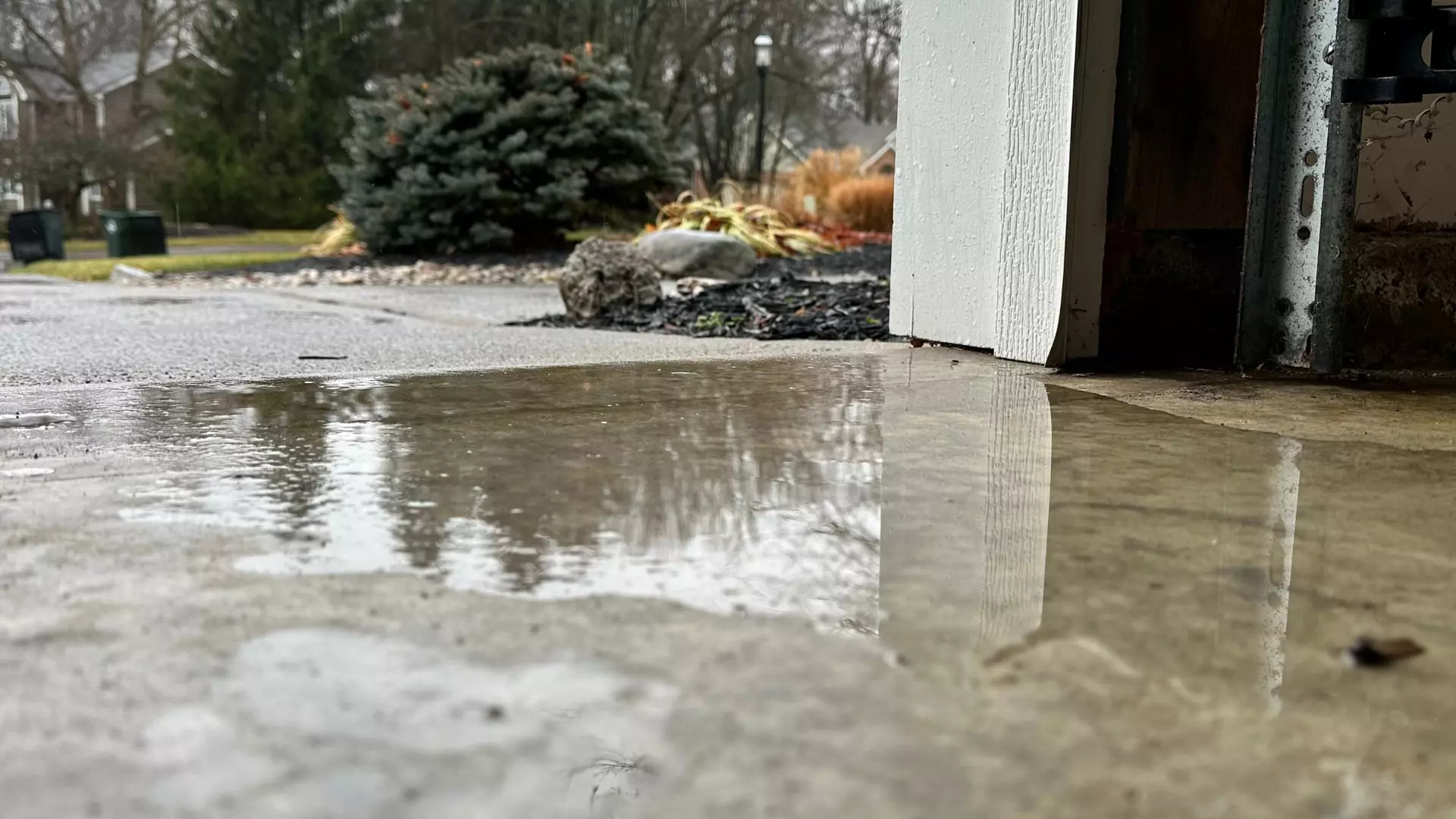
A full-contact seal can reduce wind-driven rain and irrigation runoff entering under the door. If water flows toward the garage, however, weatherstripping alone may not solve the drainage problem; a threshold or exterior drainage correction may also be needed.
Closing visible gaps also removes easy entry routes for insects and rodents seeking shelter. Standard rubber is a barrier, not a guarantee: mice and rats can chew it. Reinforced products and sealing nearby wall, vent and utility openings provide better protection when pests are already present.
Bottom seal, perimeter seal or threshold: which do you need?
The bottom seal is attached to the moving door and should make even contact with the floor. Perimeter weatherstripping is fixed to the frame and seals the two sides and top. A threshold is bonded to the concrete and is an optional second barrier for certain uneven or water-prone floors.
Most draft complaints need more than a quick rubber swap. A full inspection separates a worn seal from a bent retainer, out-of-level door, cable issue or concrete drainage problem so the repair addresses the actual source of the gap.
DIY replacement: know the safety boundary
Homeowners can often replace a slide-in seal when the retainer is straight and the exact profile is known. Clean the channels, avoid stretching the new material, leave enough length for normal contraction and confirm the safety-reverse system after the work.
Do not loosen the bottom corner brackets to remove a retainer. On many doors those brackets anchor lift cables under spring tension. Bent retainers, damaged bottom sections and doors that do not sit level are professional repairs, not weatherstripping shortcuts.
Weather seals we install across Greater Sacramento
A&M Garage Door & Gate Service matches replacement seals to Wayne Dalton, CHI, Clopay, Amarr, Martin Doors, Unique Doors, Overhead Door, Haas Door, Raynor, AlumaDoors and other residential and commercial doors. Availability depends on the existing retainer and profile.
We serve Sacramento, Natomas, Elk Grove, Roseville, Folsom, Rocklin, Citrus Heights, Rancho Cordova and surrounding communities. An inspection covers the bottom seal, retainer, side and top weatherstripping, door balance and safety reverse before we recommend the repair.
Frequently asked questions
How do I know if my garage door weather seal needs replacing?
Close the door during daylight and inspect it from inside. Visible light, drafts, water tracks, brittle rubber, flattened sections or gaps at the corners are signs the bottom seal or perimeter weatherstripping no longer makes full contact.
How long does garage door weatherstripping last in Sacramento?
Many garage door seals last about five to ten years, but there is no fixed replacement schedule. Direct afternoon sun, frequent door cycles, standing water, rodents and an uneven floor can shorten service life. Inspect the seal every fall and replace it when it becomes hard, cracked, torn or permanently compressed.
Which garage door seal material lasts the longest?
A quality EPDM rubber or TPE seal generally stays flexible longer than inexpensive PVC or vinyl under heat and UV exposure. Material is only part of the answer: the profile must fit the retainer, and the seal must compress evenly against the floor without being oversized.
Are garage door bottom seals universal?
No. Garage doors use different retainers and seal profiles, including single-T, double-T, bead-end, bulb and Wayne Dalton-style designs. Stem size and track shape matter, so the old seal or retainer should be identified before ordering a replacement.
What is the best garage door seal for an uneven floor?
A larger flexible bulb seal can handle modest variations when matched to the correct retainer. A sloped floor or deeper low spot may need a new retainer or a floor threshold as well. The door should not be adjusted to press dangerously hard against the concrete just to hide the gap.
What is the difference between a bottom seal and a garage threshold seal?
A bottom seal moves with the door and compresses against the concrete. A threshold seal is bonded to the garage floor. Every door needs a correctly fitted bottom seal; a threshold can provide added runoff protection where the driveway slopes toward the garage, but it must not interfere with safe closing and reversing.
Will a new garage door seal keep mice and rats out?
A properly fitted seal removes many common entry gaps, but ordinary rubber is not rodent-proof and can be chewed. If there are signs of rodents, ask about reinforced or rodent-resistant products and seal other openings around the garage as part of a complete exclusion plan.
Do I need weatherstripping on the sides and top of the garage door too?
Usually, yes. The bottom seal closes the floor gap, while stop molding or perimeter weatherstripping closes the top and side edges. Daylight or wind around the jambs means those seals may also need adjustment or replacement.
Can I replace garage door weatherstripping myself?
A straightforward seal swap can be a DIY job if you can safely identify the retainer and exact profile. Professional help is useful when the retainer is bent or corroded, the floor is uneven, the bottom brackets are involved, or the closed door still has gaps. Do not loosen bottom brackets because they may be connected to cables under spring tension.
How much does garage door weather seal replacement cost?
The price depends on door width, seal profile, material, retainer condition and whether side or top weatherstripping is also needed. A&M provides an upfront quote after identifying the door and measuring the gap, so you can compare the correct repair rather than a one-size-fits-all estimate.
Does A&M replace garage door seals near Sacramento?
Yes. A&M Garage Door & Gate Service installs bottom seals, retainers and perimeter weatherstripping across Sacramento, Natomas, Elk Grove, Roseville, Folsom, Rocklin, Citrus Heights and nearby Sacramento Valley communities, subject to availability.
Talk to a local technician
Free estimates and upfront pricing on garage door and gate repair anywhere in Greater Sacramento — 24 hours a day.
Keep reading
- 5 Garage Door Warning Signs Sacramento Homeowners Should Not Ignore
- 7 Signs Your Garage Door Opener Motor Is Failing (And What to Do)
- Is Your Garage Door Weatherproof? Why a New Bottom Seal Matters
- Maximizing Energy Efficiency: The Importance of Garage Door Insulation
- Wayne Dalton TorqMaster Springs: Most-Asked Questions & Facts (2026)
- How Long Do Garage Door Springs Really Last in Sacramento's Climate?
- Is It Cheaper to Repair or Replace My Garage Door Opener?
- California's Battery Backup Law for Garage Door Openers, Explained