Garage Door Track Options: Standard, Low Headroom or High Lift for Your Sacramento Home?
Compare standard, low-headroom and high-lift garage door tracks, plan space for storage or a car lift, and learn what to measure before an upgrade in Sacramento.
Quick answer: which garage door track is right for you?
Standard-radius track is usually the starting point for an ordinary sectional garage door with enough clear space above and behind the opening. Low-headroom track addresses tight overhead clearance. High-lift track lets a door rise farther up the wall before turning back into the garage, which can help in a tall garage. Vertical-lift and roof-pitch layouts solve more specialized space problems.
The best choice is the layout that fits your actual opening, ceiling, door weight, spring system and opener—not simply the tallest or most expensive option. Tracks guide the rollers; the springs counterbalance the door. Changing track geometry can require changes to both the counterbalance hardware and the opener.
For Sacramento homeowners, this is worth sorting out before ordering an insulated door, installing overhead storage, or planning a car lift. A door that looks right from the street can still be a poor fit for the space inside.
Match the problem to the option
- Ordinary ceiling and no major obstruction: start with standard-radius track.
- Beam, duct or low ceiling close to the opening: evaluate low-headroom track.
- Tall garage with a need for higher door travel: evaluate high lift.
- Very tall space with little room for horizontal tracks: investigate a true vertical-lift system.
- Sloped ceiling: ask whether a follow-roof-pitch layout is appropriate.
Standard-radius track: the practical choice for many homes
A standard track runs up each side of the opening, curves, and continues horizontally into the garage. When the door is open, its sections sit overhead. This familiar layout is often the simplest choice when the garage already has sufficient clearance and you are not trying to move the open door higher.
Its main trade-off is the space occupied by the horizontal tracks, open door and any ceiling-mounted opener. Before installing storage racks, check the door's entire travel path—not just the position it occupies when fully open.
A larger track radius changes how the sections transition through the curve. It does not automatically make the door quieter or fix a struggling opener. Rollers, hinges, alignment, mounting and correct spring balance also matter.
Low-headroom track: a solution for limited ceiling clearance
Low-headroom hardware changes how the top section moves through the turn, often using a second horizontal track for the top rollers. It can make a sectional door possible where a standard arrangement will not fit. It does not raise the garage ceiling or eliminate the need for backroom and sideroom.
Front-mount and rear-mount describe different spring and hardware arrangements. In a low-headroom torsion layout, moving the spring assembly toward the rear may reduce the clearance needed at the opening, but it changes the installation requirements elsewhere. The two layouts should not be treated as interchangeable kits.
The homeowner benefit is working around an existing beam or low ceiling without assuming the garage needs structural changes. The trade-offs can include specialized hardware, more space needed toward the rear, and tighter opener compatibility. A ceiling-mounted opener may need additional clearance beyond the door's manual-operation requirements.
High-lift track: more vertical travel in a tall garage
High lift extends the vertical part of the track so the door rises higher before curving overhead. Unlike full vertical lift, it still has a horizontal portion. This can move the open door closer to a tall ceiling and reduce interference with some workspace or storage plans.
A high-lift garage door conversion is a coordinated system change. It may require new tracks, lift-specific cable drums, cables, recalculated springs, supports and a compatible opener. Reusing an existing door is sometimes possible, but condition, dimensions, weight and manufacturer requirements have to be checked first.
If you want a vehicle lift, have the door installer and lift installer confirm the complete clearance envelope: the raised vehicle, lift posts, open door, moving sections, tracks, lights and opener. High lift alone does not prove a car lift will fit safely.
Vertical lift and roof-pitch track: different answers to different spaces
With a true vertical-lift sectional door, the door travels straight up above the opening instead of rolling back over the garage floor. It needs substantial clear wall height above the opening and an appropriate spring and operator system. It is much more common in commercial or industrial spaces than in an ordinary home garage.
High lift is not the same as vertical lift: high lift eventually turns overhead, while vertical lift does not. A tall ceiling is only one part of the assessment; wall structure, supports, door size and available operating space also matter.
Follow-roof-pitch track places the overhead portion along a sloped ceiling. It can make better use of the available space, but the pitch, transitions, mounting points and opener must be engineered for the door. A pitched roof outside does not necessarily mean the garage ceiling inside needs this layout.
These options concern sectional overhead doors. A roll-up sheet door coils above its opening and uses a different curtain, guide and support system; it is not a sectional door high-lift conversion.
What to measure: headroom, sideroom and backroom
You can collect preliminary measurements from a safe position on the floor and send photos for an initial conversation. Do not climb onto tracks, touch moving components, or remove hardware. Final measurements should be taken by the installer before hardware is ordered.
- Opening: record the finished opening's width and height, not just the outside trim or an estimated door size.
- Headroom: measure vertically from the top of the opening to the lowest obstruction. Note beams, pipes, ducts, lighting and ceiling slope across the door's path.
- Sideroom: record the clearance from each side of the opening to the nearest wall or obstruction. Measure left and right separately.
- Backroom: record the usable depth from the opening into the garage along the intended door path. Note shelves, beams and storage racks.
- Existing hardware: photograph the full door from inside while closed, both tracks, springs, opener model label and any obstructions. Stay clear of cables and spring assemblies.
- Your goal: explain whether you need a quieter replacement, a fit below a beam, ceiling storage, a wall-mount opener or clearance for a vehicle lift.
How much headroom do you need? Read the numbers carefully
There is no single minimum that applies to every garage door. Track radius, door height, spring placement, top fixtures and opener all affect the required clearance. A door that can operate manually within a listed clearance may still need more space for an automatic opener.
As examples, Clopay's residential buying guide lists 12 inches of headroom for a 12-inch-radius, 2-inch track arrangement and 14.25 inches for its 15-inch-radius example. It also describes low-headroom examples around 9 inches for front mount and 4.5 inches for rear mount. These are the guide's configuration examples—not a guarantee that your particular door and opener will fit those measurements.
Ask for the current installation drawing for the exact door, track, spring and opener combination. A 12- or 15-inch radius describes the curve; it is not the same measurement as track width. Common references to 2-inch and 3-inch track describe the track size, not the thickness of its steel. Steel gauge is a separate specification.
Can you use a wall-mount opener with these tracks?
A wall-mount opener can remove the long center rail and motor from the ceiling, but it does not remove the door's horizontal tracks. It is not compatible with every spring or track system. The exact opener manual, torsion shaft arrangement, drums, side clearance and door travel determine whether it is suitable.
For example, LiftMaster's 8500W instructions exclude extension-spring doors and low-headroom track with outside pickup drums. That is a model-specific limitation, not a blanket statement that all low-headroom doors either work or do not work with every wall-mount opener. Check the manual for the model being proposed rather than relying on the words 'jackshaft' or 'wall mount' alone.
A new residential opener installed in California also needs compliant battery backup. Opener selection, safety sensors and the counterbalance system should be considered together when converting a door to high lift or replacing its track layout.
Track repair or track conversion: which problem are you solving?
A bent track, displaced roller, uneven door or scraping sound calls for diagnosis—not automatically a high-lift upgrade. Possible causes include roller wear, damaged hinges, loose supports, a cable problem or an unbalanced door. Replacing the track without identifying the cause can leave the underlying problem unresolved.
If the door is crooked, hanging, has a roller out of the track, or has a loose cable, stop using it and keep people and vehicles away. Do not force it with the opener, pry a roller back in, loosen bottom brackets, or attempt spring and cable adjustments. Do not pull the emergency release on an unstable or partially open door; it may fall.
A conversion is different: it intentionally changes a sound door's travel path to suit the space. Have a technician inspect the complete system and explain whether repair, a conversion or a replacement door is the appropriate next step.
What affects the cost—and how long do garage door tracks last?
There is no reliable one-price answer without measuring the garage. A straightforward damaged-track replacement and a high-lift conversion involve very different work. Price depends on the layout, door size and weight, hardware that can safely be reused, spring and drum changes, opener compatibility, access, supports and labor. Structural changes, if needed, are separate from a basic hardware change.
Request a written scope that separates tracks, counterbalance hardware, opener changes and labor. If you are already replacing the door, compare a complete correctly matched package with a retrofit of the existing system. This is more useful than comparing online prices for a pair of rails alone.
Tracks do not have a universal replacement age. Properly supported, undamaged tracks may remain serviceable for many years; impacts, corrosion, poor alignment and repeated roller problems can shorten their useful life. Condition matters more than a calendar date. Keep the area clear and follow the manufacturer's maintenance instructions; do not pack track channels with grease as a substitute for correcting a problem.
Planning a garage door upgrade in Greater Sacramento
Whether your home is in Sacramento, Natomas, Elk Grove, Roseville or Folsom, start with the space you actually have. A low beam in an existing garage and a tall ceiling in a workshop call for different hardware—even when the doors have the same opening size.
A&M Garage Door & Gate Service can help you review your existing door and opener and discuss the appropriate repair or replacement. Send your opening measurements, interior photos and the goal for your garage through our contact page, or call (279) 900-6320. Preliminary photos help the conversation; final fit and pricing require a site assessment.
Before approving a proposal, ask: Does this layout clear every obstruction through the full travel? Is the spring system matched to this door and lift type? Is the proposed opener approved for this setup? Does the quote include supports, safety checks and any required opener changes? Those answers matter more than choosing an option by its name.
Frequently asked questions
What are the main garage door track options?
For sectional doors, the main layouts are standard radius, low headroom, high lift, vertical lift and follow roof pitch. They differ in how the door moves and the space required above, beside and behind the opening.
What is the difference between standard lift and high lift?
Standard lift turns the door overhead near the top of the opening. High lift adds vertical travel before that turn, moving the open door higher in a suitably tall garage. High lift still uses horizontal tracks.
Is high lift the same as vertical lift?
No. A high-lift door eventually turns back into the garage. A true vertical-lift door travels straight up above the opening and needs substantial clear wall height and a suitable operating system.
Can I fit a garage door under a low ceiling?
A low-headroom track arrangement may help, but the door, springs, opener, backroom and sideroom must all fit. Have the installer check the exact configuration rather than assuming any low-headroom kit will work.
What is the difference between front-mount and rear-mount low headroom?
In low-headroom torsion layouts, the spring assembly can be arranged near the opening or toward the rear. Rear mounting can reduce clearance needed at the opening but changes space and hardware requirements elsewhere. Use the door manufacturer's approved layout.
How much headroom does a garage door need?
The minimum depends on the exact door, track radius, spring arrangement, top fixtures and opener. Clopay's guide provides configuration examples, but the current installation drawing for your complete system—not a generic number—should determine final fit.
Are 12-inch and 15-inch radius tracks interchangeable?
Do not assume so. A radius change affects door travel and clearance and may require matching fixtures and other hardware. Check manufacturer requirements for the complete door and opener setup before changing the curve.
Can I convert my existing garage door to high lift?
Sometimes. A professional must check the door's condition, weight, available height and mounting structure. A conversion may require new tracks, drums, cables, springs and a compatible opener; it is not just a matter of extending the rails.
Will a high-lift garage door make room for a car lift?
It may help, but does not guarantee safe clearance. The door and vehicle-lift installers must check the raised vehicle, lift posts, door travel, supports, lights and opener together.
Can I use a wall-mount opener with low-headroom tracks?
It depends on the exact opener model and track, spring and drum arrangement. For example, LiftMaster's 8500W excludes extension springs and low-headroom track with outside pickup drums. Consult the proposed opener's manual.
Does a wall-mount opener remove the overhead tracks?
No. It can eliminate the ceiling-mounted opener's center rail, but a standard or high-lift sectional door still needs its horizontal tracks. A true vertical-lift layout is a different system.
What track works with a sloped garage ceiling?
A follow-roof-pitch arrangement may follow the interior ceiling slope. The pitch, track transition, supports and opener need to be matched to the door. The exterior roof shape alone does not determine the track layout.
Are garage door tracks universal across brands?
No. Similar-looking tracks can differ in radius, size, mounting and required hardware. Do not mix components solely because they appear to fit; use manufacturer-compatible specifications for the complete assembly.
How much does a high-lift garage door conversion cost in Sacramento?
An accurate price requires measuring the garage and checking the existing system. Track geometry, springs, drums, cables, supports, opener changes and labor affect the quote. Ask for an itemized scope instead of comparing rail-only prices.
Can I straighten a bent track or put a roller back myself?
Do not force a damaged door or attempt repairs to springs, cables or loaded hardware. A door with a roller out, loose cable or uneven position can fall. Stop operating it, keep the area clear and contact a trained technician.
Will changing tracks make my garage door quieter?
Only if the track is part of the problem. Noise can also come from rollers, hinges, mounting, the opener or incorrect balance. Have the source diagnosed before buying a different track layout.
How long do garage door tracks last?
There is no universal lifespan. Impacts, corrosion, mounting and roller condition matter more than age alone. Replace damaged or unsuitable parts based on inspection and manufacturer guidance rather than a fixed year count.
What should I send A&M before asking for a track-options quote?
Send opening width and height, approximate headroom, left and right sideroom, available backroom, interior photos, the opener model and your goal. Collect only what you can safely reach; an installer should confirm measurements before ordering.
Manufacturer guidance and safety references
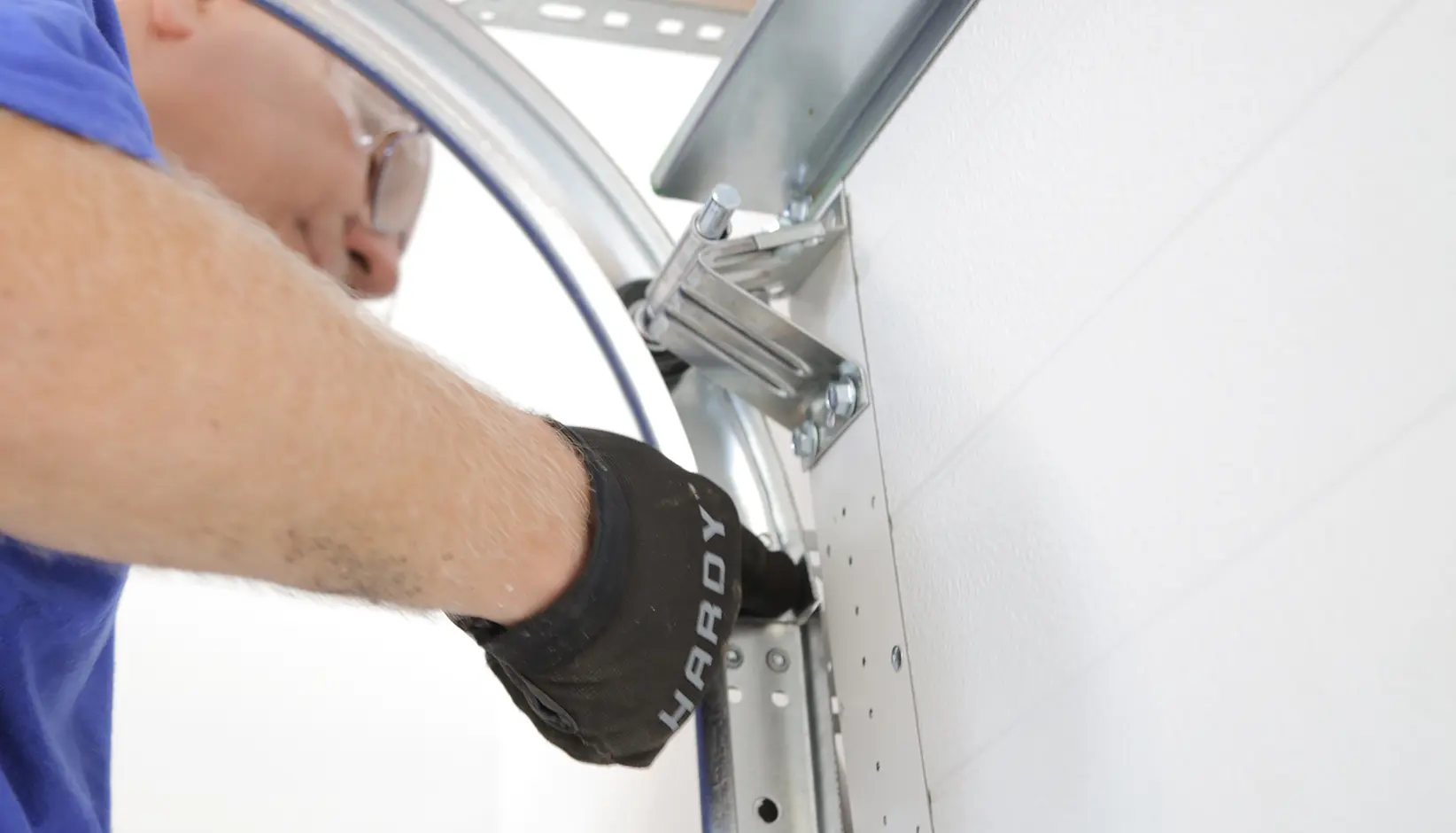
- Clopay — Residential Garage Door Track Options (also the source of the supplied article photo)
- Clopay — Track and spring preparation; commercial specifications are not universal residential clearances
- LiftMaster — 98022 installation manual and door compatibility requirements
- DASMA — Garage door safety tips
Reviewed October 22, 2026. Always follow the instructions for your specific door, gate and operator.
Talk to a local technician
Free estimates and upfront pricing on garage door and gate repair anywhere in Greater Sacramento — 24 hours a day.
Keep reading
- California's Garage Door Battery Backup Law (SB 969): What Sacramento Homeowners Need to Know
- Automatic Driveway Gate Cost in Sacramento: Swing vs Slide (2026 Guide)
- 5 Garage Door Warning Signs Sacramento Homeowners Should Not Ignore
- 5 Reasons to Upgrade Your Garage Door Weather Seals This Fall
- 7 Signs Your Garage Door Opener Motor Is Failing (And What to Do)
- Is Your Garage Door Weatherproof? Why a New Bottom Seal Matters
- Maximizing Energy Efficiency: The Importance of Garage Door Insulation
- Wayne Dalton TorqMaster Springs: Most-Asked Questions & Facts (2026)
- How Long Do Garage Door Springs Really Last in Sacramento's Climate?
- Is It Cheaper to Repair or Replace My Garage Door Opener?